On this page
Automation isn’t something to hand over: it’s something to steer, and structuring your campaigns well is how you do it. Brands that win with Smart Bidding, Performance Max and AI Max aren’t the ones who “let the algorithm do its thing”; they’re the ones who structure the inputs, data, signals and account structure, so the algorithm optimises toward the right outcome. Get the inputs right and automation is a force multiplier; get them wrong and it confidently scales the wrong thing.
This guide focuses on Google Ads, but the same principles apply to Microsoft Advertising, Meta Advantage+ and TikTok Smart+.
Start with the signals: data quality first
Automated bidding is only as good as the data it learns from. Before you touch a bid strategy:
- Fix conversion tracking so each conversion fires once, accurately (the first thing our Google Ads audit checklist covers)
- Choose the right primary conversions. Only actions you genuinely want more of should be set as primary; micro-actions like page views belong as secondary, for observation only.
- Feed commercial value, not volume: margin-weighted values and, ideally, offline conversions imported from your CRM, so the model chases profit and qualified pipeline, not form-fills
- Strengthen signal resilience: enhanced conversions and a correct Consent Mode setup help recover conversions lost to browser restrictions and consent choices
- Add clean exclusions and negatives so it isn’t optimising toward junk
Garbage in, confidently scaled garbage out.
Give the model the right goal
Match the bid strategy to your objective and your data volume:
- Maximise conversions / Target CPA for lead generation with a clear cost ceiling (set a realistic one with our CPA calculator)
- Maximise conversion value / Target ROAS when you have revenue values and enough conversions to learn: set the target from your margins, not a guess (our ROAS calculator helps)
- New customer acquisition goals where you want to value or bid for new customers differently from existing ones
- Don’t rush low-volume accounts into tight targets. A campaign with very few conversions struggles to learn; start with a maximise strategy, build volume, then introduce a target.
A target that’s too aggressive throttles delivery; one that’s too loose wastes budget. Start close to recent actual performance and move it gradually.
Consolidate for learning, segment for control
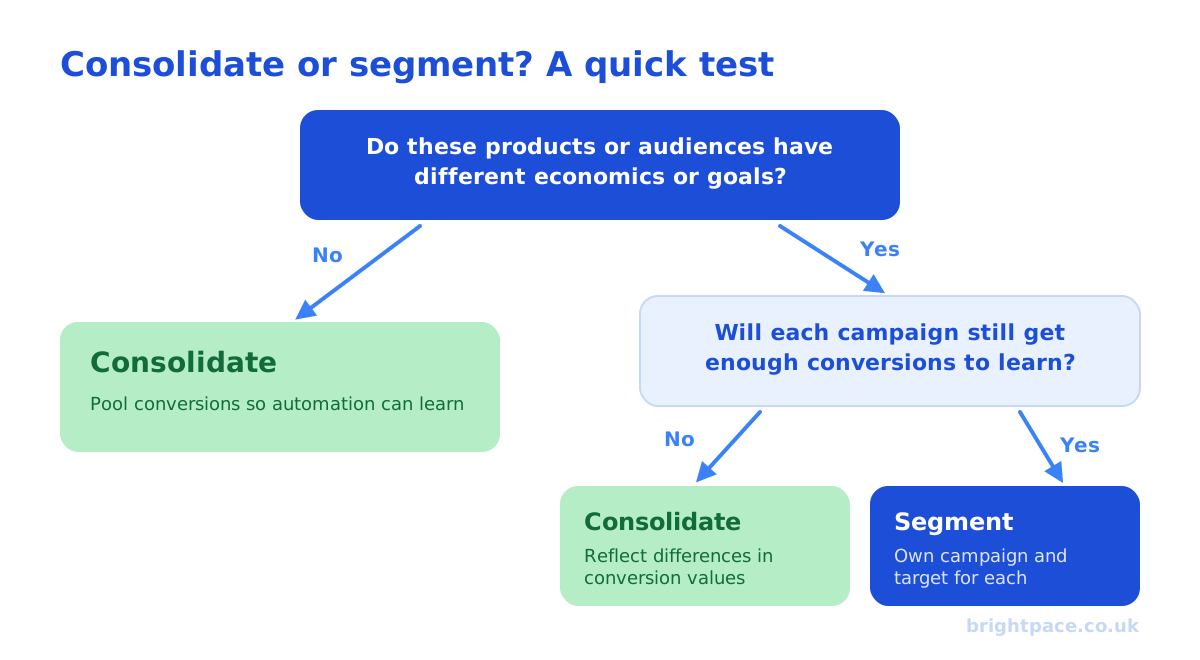
Automation loves data density, so over-segmentation is the classic mistake: ten tiny campaigns each too sparse to learn. But total consolidation loses control. The balance:
- Consolidate where products or audiences behave similarly, so campaigns pool enough conversions to learn
- Segment where the economics genuinely differ, margin, priority, stock level or a different target, so you can set different goals
- Give each campaign one clear job, then let automation handle the millions of micro-decisions inside those boundaries
Where segmentation usually earns its place
- Brand versus non-brand. Brand searches convert cheaply and will flatter a blended target, pulling budget away from genuine new demand. Keep them separate, and use brand exclusions in Performance Max where appropriate.
- Margin tiers. Group products by margin so high-margin lines can run to a lower ROAS target than low-margin ones.
- Markets and languages. Different countries have different costs, competition and conversion rates.
- Genuinely different goals. Leads versus sales, or a new product launch that needs volume over efficiency.
Where it usually doesn’t
- Splitting by match type or device alone
- Separate campaigns for every small product category with similar economics
- Duplicating campaigns to “test” bid strategies without a proper experiment
Use portfolio strategies and shared budgets carefully
Portfolio bid strategies let several campaigns share one target, pooling their data: useful for low-volume campaigns with the same goal. Shared budgets are convenient but let one campaign starve another; use them only where campaigns genuinely share a priority.
Handle the unusual days properly
Automated bidding learns from history, so unusual periods need managing:
- Seasonality adjustments tell Smart Bidding to expect a short-term jump in conversion rate: useful for sales events like Black Friday
- Data exclusions stop the model learning from days when tracking broke or data was wrong
- Big changes in stock, pricing or site should be reflected in targets, not left for the algorithm to discover
Then steer, don’t stop
Once it’s live, resist the urge to tinker daily: frequent reactive changes to targets and budgets restart learning and make results hard to read. Instead:
- Let bid strategies through their learning period (Google shows a “Learning” status) before judging them
- Adjust targets and inputs, values, audiences, exclusions, creative and feeds, not micro-bids
- Make changes in measured steps rather than large swings
- Test big changes, such as a new bid strategy, with a proper campaign experiment
- Review on a steady cadence against commercial outcomes
A structure checklist
- Conversion tracking accurate, deduplicated and consent-aware
- Primary conversions reflect real business value
- Values passed for sales; offline outcomes imported for leads where possible
- Bid strategy matched to goal and data volume
- Brand separated from non-brand
- Campaigns segmented only where economics or goals differ
- Negatives, exclusions and brand controls in place
- Seasonality adjustments and data exclusions used when needed
- Changes made in measured steps, big ones tested with experiments
- Performance judged on blended business results
FAQs
How should campaigns be structured for Smart Bidding and AI campaigns?
Consolidate so each campaign gets enough conversions to learn, and only split campaigns where the economics differ, such as products with very different margins.
What data does platform automation need?
Accurate conversion tracking, real conversion values and, where possible, offline outcomes such as qualified leads or profit, so the algorithm optimises to what matters.
Should I stop automated campaigns when performance dips?
Usually not. Pausing resets learning. Steer instead with targets, budgets, exclusions and better signals, and give changes time to settle.
In short
Structure the inputs, clean data, true value, sensible consolidation and clear goals, and platform AI becomes an advantage rather than a black box. Segment only where the economics differ, manage the unusual days, and steer with targets and signals. Don’t hand over the wheel, and don’t grab it every five minutes.
Sources
The platform documentation and coverage this guide is checked against. Last checked October 2026.
- About Smart Bidding, Google Ads Help
- About Target ROAS bidding, Google Ads Help
- About seasonality adjustments, Google Ads Help
Want automation working for you, not around you? That’s core to our PPC management. Let’s chat, or start with a paid audit.
Want a senior eye on your paid search?
Work directly with the founder: no juniors, no hand-offs, 30-day rolling contracts.